

Freezers and beverage coolers: an investment that protects your business from losses
Characteristic Upright freezer Freezer table-refrigerator Horizontal freezer (gel) Area utilization Occupies a small floor area, grows in height. Multifunctional (work
The invisible foundation of any successful restaurant, cafe or bar is not only experienced staff or sophisticated interior, but also a well-functioning refrigeration infrastructure. In the HoReCa sector, a refrigerator is much more than just a piece of equipment — it is the main defender of your financial assets, product quality and consumer safety. Statistically, incorrectly selected or unprofessional refrigeration systems are one of the main sources of hidden losses of the facility. Constant temperature fluctuations of even 2 degrees in the chamber directly lead to damage to the structure of expensive ingredients (meat, seafood), improper cooling of drinks and a sharp increase in electricity bills.
Many entrepreneurs make a strategic mistake when, in order to reduce capital costs, they choose budget or incorrectly sized models instead of industrial equipment designed for heavy-duty operation. In the long run, these “savings” are valued in spoiled products and lost customers. In this article, we will analyze in detail the specifics of beverage and freezer refrigerators, present the technical challenges on the market, and show you how to choose equipment that will ensure the uninterrupted and profitable operation of your business.
Beverage Refrigerators: The “Face” of the Bar and a Sales Generator
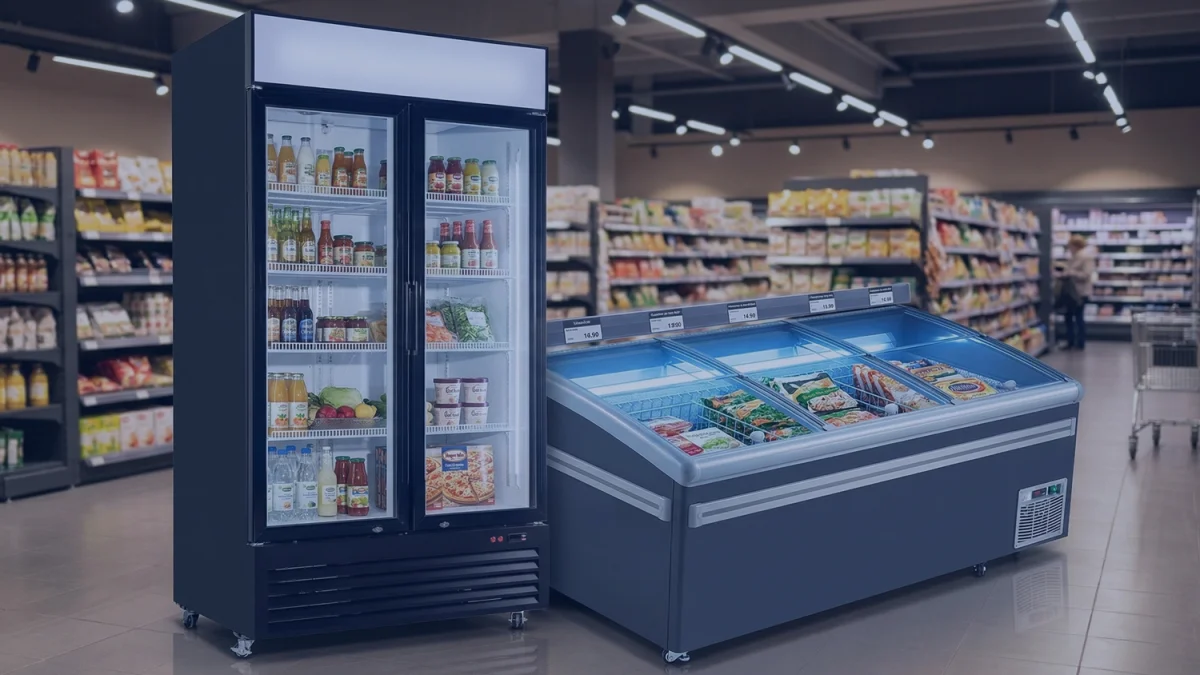
A display cooler is not just a means of cooling — it is a key tool for presenting your products (merchandising). When it comes to a bar, cafe or supermarket, visual appeal is directly proportional to increased sales. However, behind the attractive visuals lies a major technical challenge: fast temperature recovery (Pull-down time).
In a commercial facility, the door of a beverage refrigerator can be opened dozens of times per hour. If the compressor is not powerful, the internal temperature rises sharply, condensation forms on the glass (frosting) and the beverage heats up. That is why choosing the right model with the right capacity and performance is crucial:
- Large volume requirements: For facilities with large product turnover, vertical display refrigerators are the ideal choice. Models such as the GN-660 , GN-1000 and GN-1250 are designed for maximum capacity. Their dynamic cooling system ensures even distribution of cold air on all shelves, meaning that the drink on the top shelf is just as cold as the one on the bottom.
- Optimize space in the bar (Under-counter models): When the bartender’s workspace is limited, ergonomics are vital. Horizontal bar refrigerators, such as the BKB-235H (2-door) and BKB-335H (3-door, 320 liters) , are installed under the table. This allows the bartender to serve drinks to customers in seconds without having to leave the work area. The special glass of these models protects the product from ultraviolet rays and prevents heat from penetrating.
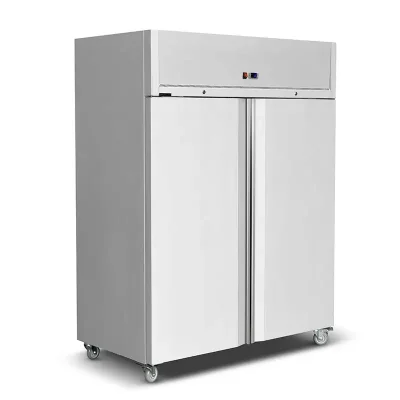
Vertical refrigerator KCD1.0L4F – 2 doors
SKU:GN20ST0475
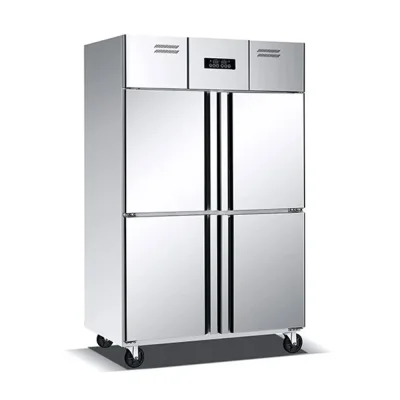
Vertical refrigerator KCD1.0L4F – 4 doors
SKU:GN20ST0476
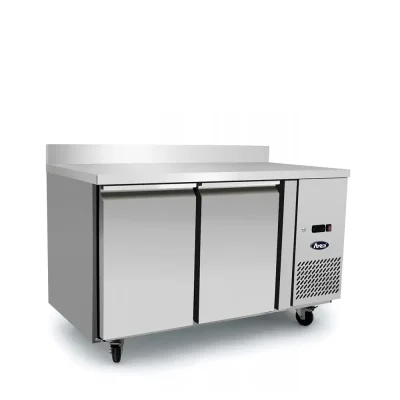
Freezer table-refrigerator TC0.4L1F – 2 doors
SKU:TC0.4L1F
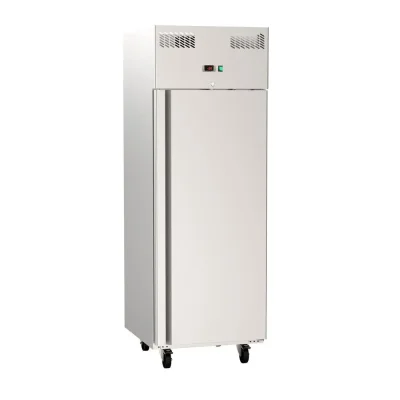
Upright freezer refrigerator SP650BT – 1 door
SKU:SP650BT
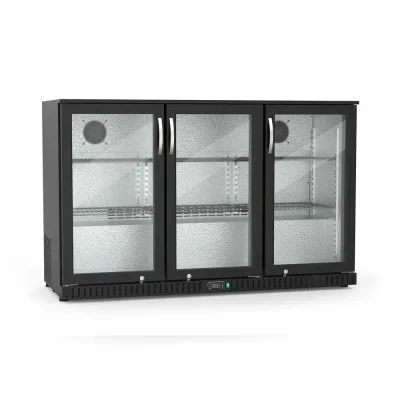
Bar refrigerator BKB-335H – 3 doors, 320 liters
SKU:BKB-335H
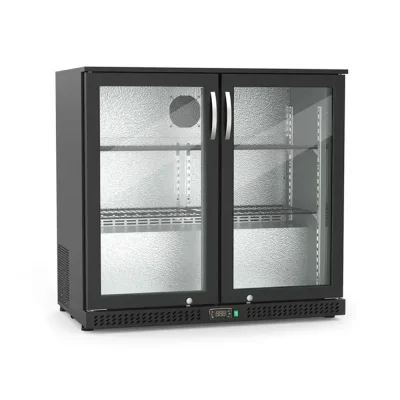
Bar refrigerator BKB-235H – 2 doors
SKU:BKB-235H
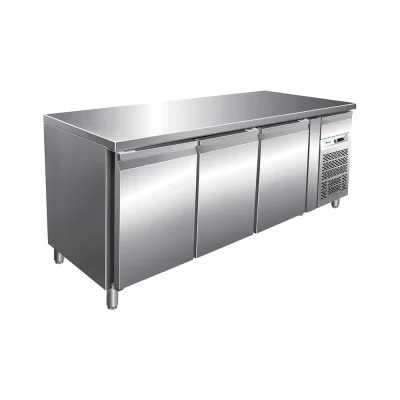
Freezer table refrigerator with 3 doors SN3100BT
SKU:SN3100BT
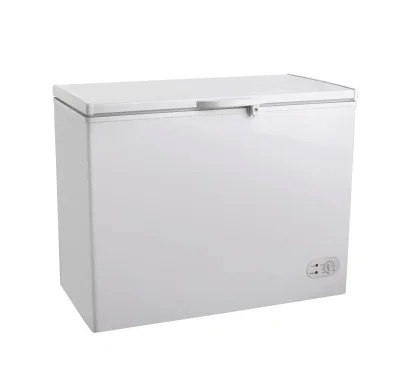
Refrigerator freezer BD-215
SKU:BD-215
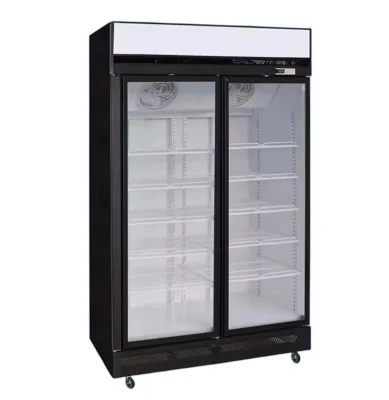
Beverage refrigerator GN-1250
SKU:GN-1250
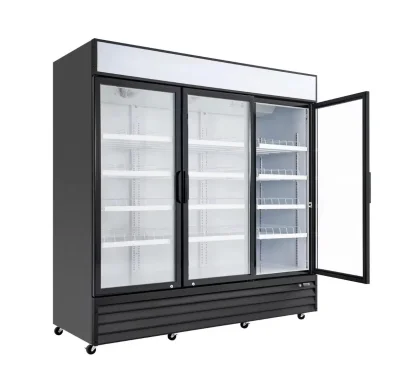
Beverage refrigerator GN-1000
SKU:GN-1000
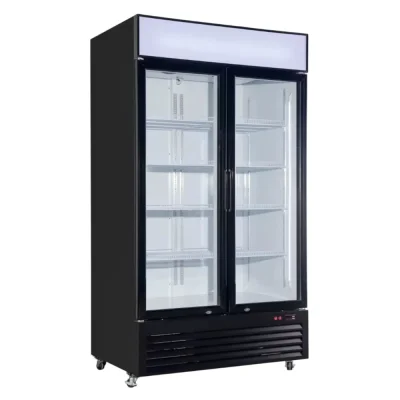
Beverage refrigerator GN-660
SKU:GN-660
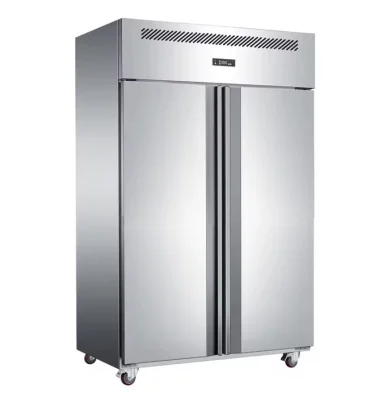
Freezer upright refrigerator with 2 doors 1476 lt. SP1410BT
SKU:SP1410BT
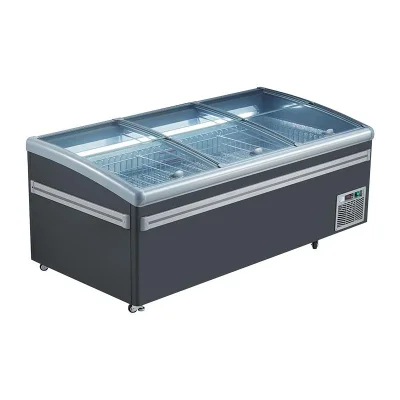
Refrigerator-freezer SD/SC-900
SKU:SD/SC-900
Refrigerator freezers for the kitchen: a guarantee of product safety
If a beverage refrigerator is the “face” of a business, a freezer is its “heart.” A commercial freezer is radically different from a household appliance. It must withstand the aggressive environment of the kitchen (high temperatures, steam, grease) and maintain a stable temperature of -18°C to -22°C. Violation of the temperature regime leads to the proliferation of microorganisms and the need to dispose of the product (meat, fish, semi-finished products).
Depending on the specifics of the business, there are several categories of freezers on the market. Making the right choice depends on the area of the kitchen, the volume of the menu, and the dynamics of work.
1. Upright Freezers
This category is best when you need perfect organization of products and quick access to them. The vertical layout makes economical use of floor space.
- Challenge and solution: The main challenge is the weight of the products on the shelves and the frequent door opening. Models such as the stainless steel SP1410BT (2-door, 1476 liters) or the ICEINOX VTS 1150 N CR offer industrial durability. For smaller spaces, the single-door models – SP650BT , CNS-101 (700 liters) or KCD1.0L4F – integrate perfectly into professional environments. Their advantage is the ability to adjust the shelves to accommodate oversized products.
2. Counter Freezers
This is a 2-in-1 solution that is a real salvation for small and medium-sized kitchens. The top is used as a stainless steel worktop (for food preparation), while the bottom is a full-fledged freezer.
- Efficiency in practice: the cook stands at the table and does not need to go to another room or area to remove ingredients, which dramatically increases the speed of service. The models presented in the GN Industrial catalog: SN3100BT (3-door) , SN2100BT (2-door) , ICEINOX CTS 440 NCR and TC0.4L1F / TC0.4L2F are distinguished by strong insulation so that the processing of hot products on the surface does not affect the temperature of the lower freezer chamber.
3. Chest Freezers
If your business requires long-term storage of large quantities of products (e.g., meat blocks, frozen vegetables, baked goods), chest freezers are the only option.
- Advantages: They are distinguished by the best thermal insulation. Since cold air is heavy, when the door (top lid) is opened, it does not “run away” from the refrigerator as quickly as in the case of vertical models. This makes them the most energy-efficient choice. Depending on your needs, you can choose both compact models ( BD-215 , SD/SC-400 ), and devices of solid volume ( BD-650 , SD/SC-900 , SD/SC-700 ).
Comparative analysis of formats: which one suits your kitchen?
For visual clarity, we offer a practical comparison of different types of freezers:
| Characteristic | Upright freezer | Freezer table-refrigerator | Horizontal freezer (gel) |
| Area utilization | Occupies a small floor area, grows in height. | Multifunctional (work surface + freezer). | Requires a large floor area. |
| Access speed | Very fast. The product is visible and sorted. | For the fastest cook (directly in the work area). | Slow. Need to remove/move the product from underneath. |
| Energy efficiency | Medium (cold air is lost when the door is opened). | Average. | Highest (cold air remains in the chamber when the lid is opened). |
| Best use | An active, daily line with a variety of ingredients. | Directly to the Prep area for quick service. | For long-term storage of large quantities of product in warehouse areas. |
5 technical features you should pay attention to when buying
Choosing a refrigerator for your business shouldn’t be based solely on price. In the long run, cheap, low-quality equipment will cost you much more in repairs and broken products. Be sure to consider the following details:
- Climate Class: The temperature in a restaurant kitchen can reach 40°C. A household refrigerator will fail in such conditions. Choose an appliance with a “Tropicalized” or high climate class (class 4 or 5), which will operate without problems even in outdoor temperatures of +43°C.
- Material – Stainless steel (AISI 304): The internal and external housing of professional units should be made of high-quality stainless steel (ideally grade 304). It is resistant to corrosion, does not absorb odors and is the easiest to clean. In relatively budget models, grades 201 or 430 are found, which are acceptable for dry areas, but require attention in humid environments.
- Insulation thickness: The thickness of the polyurethane foam in the walls of the refrigerator (preferably 60mm or more) directly determines its thermal insulation. The thicker the insulation, the less load the compressor will operate under and the more electricity you will save at the end of the month.
- No-Frost vs. Automatic Defrost: In a professional environment, time is money. Appliances that have an automatic defrost system or operate on the No-Frost principle free staff from the time-consuming routine of manually defrosting the refrigerator and protect the system from the accumulation of a layer of ice, which reduces the efficiency of the compressor.
- Compressor quality and placement: European (e.g. Danfoss, Embraco) compressors are distinguished by their long service life. In the case of vertical refrigerators, pay attention to the placement of the unit (top or bottom). A top-mounted unit sucks less dust from the floor and releases warm air outside, which is ideal for hot kitchens.
Maintenance: The Secret to Cutting Costs
Even the best and most expensive refrigerator in the world will lose its efficiency if it is not properly maintained. The #1 reason commercial refrigerators fail is a dirty condenser.
When kitchen grease and dust clog the condenser fins, the unit can no longer cool the freon. At this point, the compressor starts working non-stop, energy consumption increases by 30-50%, and the life of the unit decreases dramatically. A simple cleaning of the condenser once a month with a vacuum cleaner or soft brush is a free procedure that can save you hundreds of GEL in electricity and service bills.
The right commercial freezer or beverage cooler is not an expense; it is an investment that speeds up service, reduces product loss, and ensures the highest standards of food safety. Whether it is the elegantly designed BKB-235H for your bar, the gigantic SP1410BT for your kitchen pantry, or the practical SN3100BT table-top refrigerator for your chef’s work area — the choice should be tailored to the specifics of your business.
Do you need help making a decision?
Stop wasting money on the wrong equipment. Write to us or visit us on site so that our technical experts can study your facility’s infrastructure and select the exact models that will bring you maximum profitability.